
Category: Bagg

Summer in Georgeville

St Clair Lodge

Georgeville is a charming village, nestled between the hills and farms of Quebec’s Eastern Townships and the shores of Lake Memphremagog. There is a fancy general store, a park complete with old-fashioned gazebo, and a wharf popular with recreational boaters. The village has a cheerful mix of weekend cottagers and year-round residents. It that respect, it hasn’t changed much in more than 100 years.

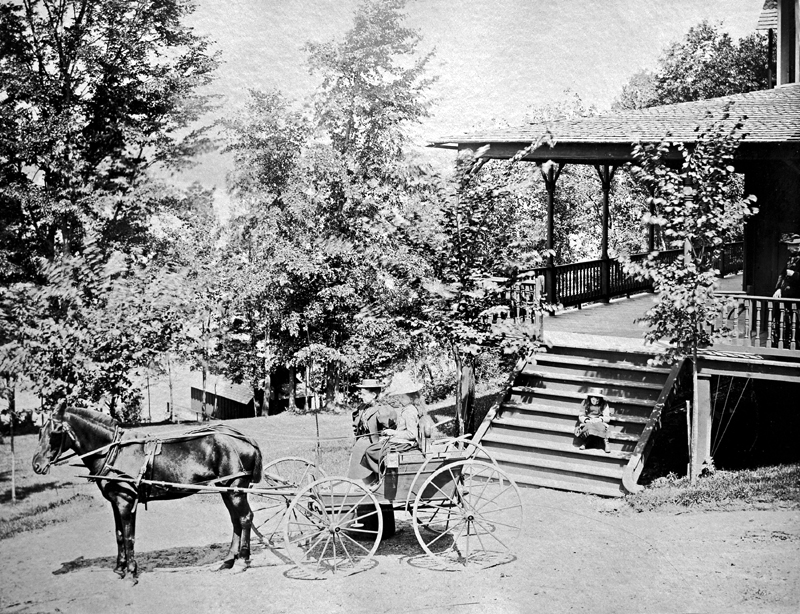
A few years ago, I discovered that my great-grandparents owned a summer house there. According to the 1895-1896 Lovell’s Directory of Montreal, Robert Stanley Bagg’s summer residence was St. Clair Lodge, Georgeville. I had uncovered another bit of lost family history: although I have owned a small cottage about 15 minutes from there since 1979, I had no idea there was an ancestral connection to the area.

Montreal-born Robert Stanley Bagg (1848-1912) studied law and became a businessman. He married Clara Smithers in 1882 and the couple had three children, Evelyn, Gwendolyn (my grandmother) and Harold Stanley. I asked several people around Georgeville whether they knew of a house called St. Clair Lodge, but had no luck. Then Louise Abbott, a friend who is writing a book about the history of Lake Memphremagog, contacted me to ask about my great-grandparents. She had never heard of St. Clair Lodge, but she told me that’s because the property has been called Edgewood for many years. The house is still standing, though much has changed, and Louise sent me some photos.

Among some old letters and newspaper clippings, I made another discovery: Robert Stanley Bagg donated the bell to the St. George’s Anglican Church. The church too is still standing.  
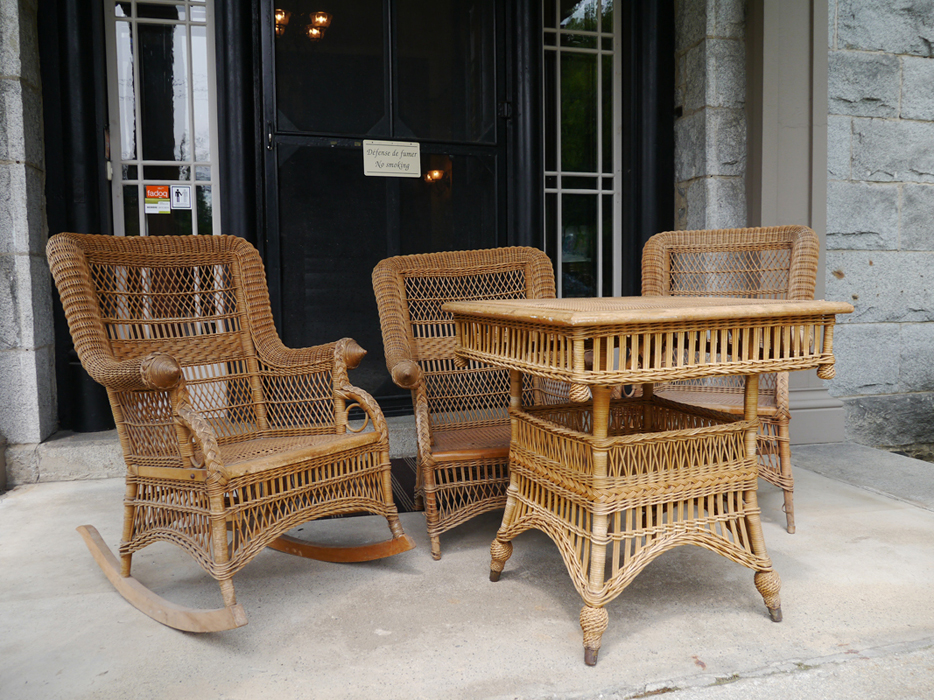
This furniture set which came from the Bagg house has a new home with the Stanstead Historical Society.

There is a good reason why my ancestors spent their summers in Georgeville, apart from the beauty of the place: Montreal was an extremely unhealthy place, especially in summer, and especially for small children. In 1900, the city had a higher infant mortality rate than most Third World countries do today. With no water treatment and inadequate sewers, diarrhea was the biggest killer. Diphtheria, typhoid, tuberculosis, measles and other communicable diseases also posed threats. These conditions affected the poor more than the wealthy, but that was partly because anyone who could afford to leave the city in the summer did so.
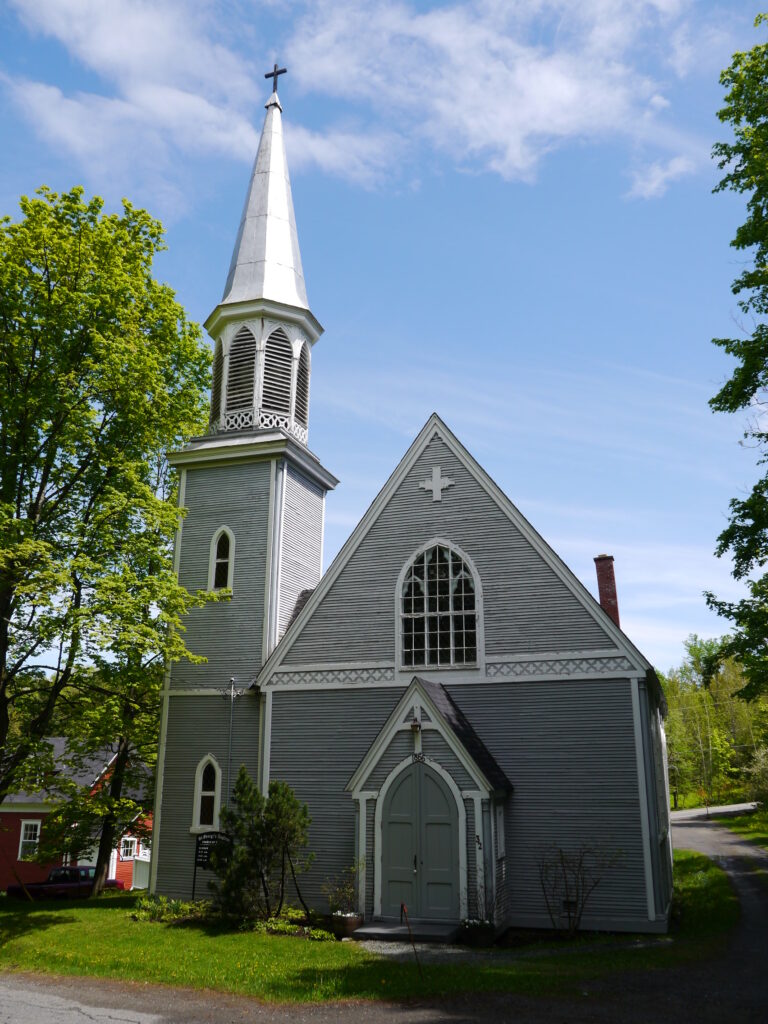
St. George’s Anglican Church, Georgeville

Many Montrealers summered in the Eastern Townships, known officially today as l’Estrie. Southeast of Montreal, this was originally the territory of the Abenaki First Nations people. American Loyalists started to move into the area around 1791, and Georgeville was founded in 1797 when enterprising settler Moses Copp started a ferry service across the lake.

As the population and industry of the Eastern Townships grew, so did the network of railways that crossed the area. Most important was the Grand Trunk Railway, completed in 1853, linking Montreal with the ice-free harbour of Portland, Maine. 

The Bagg family sold their Georgeville house around 1900, but, along with many of their friends, they continued to spend their summers far from Montreal, first at Cacouna, on the St. Lawrence River, downriver from Quebec City, and later near St. Agathe, in the Laurentian mountains north of Montreal, and in Kennebunkport, Maine.

Photos: courtesy Fran Williams
Janice Hamilton (added March 14, 2015)
Janice Hamilton

Research Remarks: Here are some resources reflecting the history of the Eastern Townships’ English-speaking population. Since the mid-1800s, the majority of area residents have been French-speaking.

http://townshipsheritage.com/ The Townships Heritage Web Magazine features articles, old photos and maps. http://www.etrc.ca  The Eastern Townships Resource Centre (ETRC) has an extensive collection of publications, genealogical sources and other material. Of special interest is a series of articles about local history published by the Sherbrooke Record, http://www.etrc.ca/archives-department/historical-articles-from-the-etrc.htmlhttp://www.interment.net/can/qc/stanstead.htm  Headstones in the many rural cemeteries around Stanstead County are listed here.

http://www.colbycurtis.ca/eng/archives.html  This is a link to the archives of the Stanstead Historical Society, located in the Colby-Curtis Museum in Stanstead, Quebec, near the Quebec-Vermont border.  

http://georgevillequebec.blogspot.ca/  This blog features old postcards of Georgeville and a link to photos from the McCord Museum in Montreal.
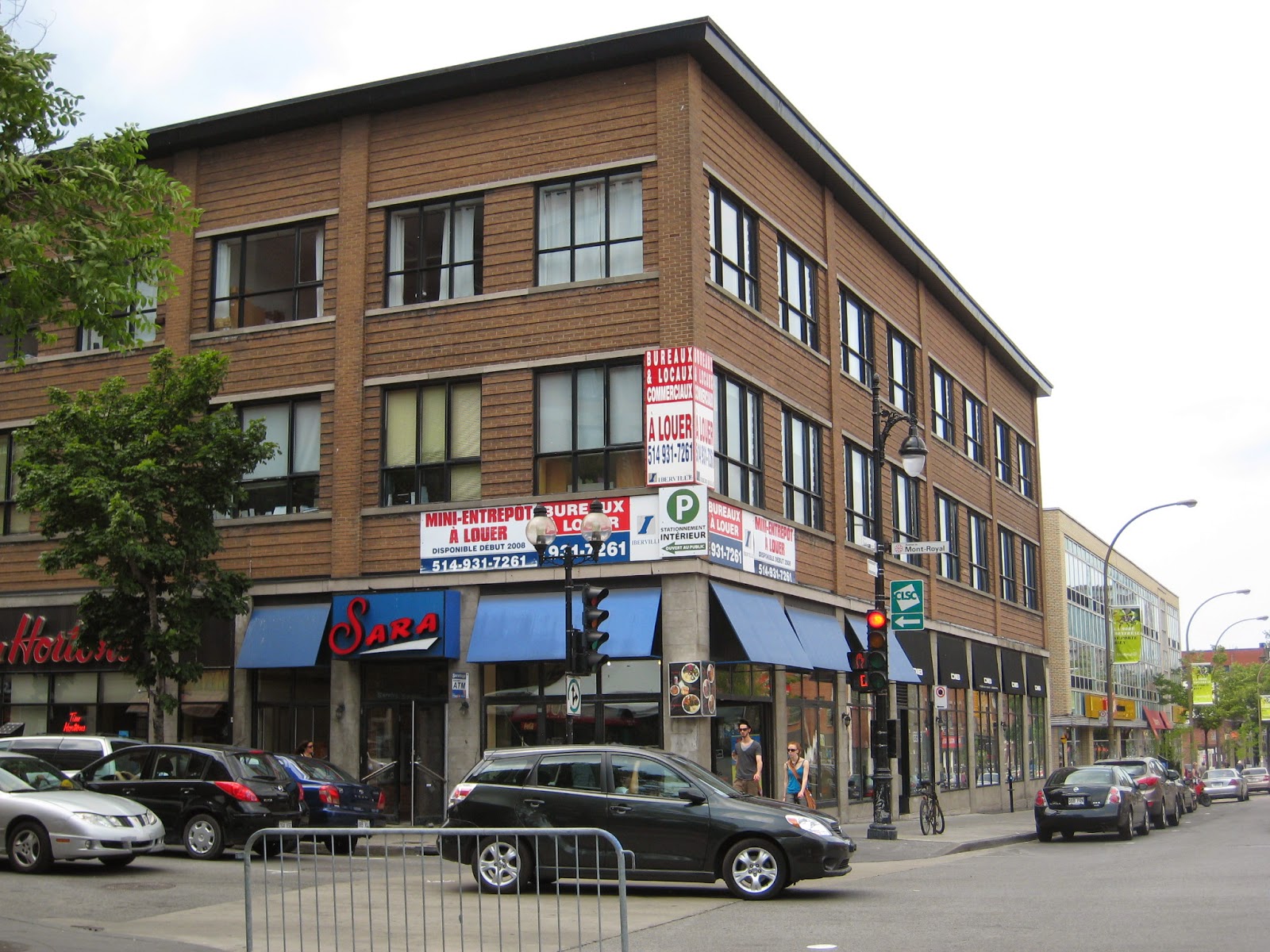
The Mile End Tavern

On Oct. 17, 1810 in the afternoon, my great-great-great grandfather Stanley Bagg and his father, Phineas, visited the office of a Montreal notary to co-sign a lease for the Mile End Tavern with landlord John Clark. That lease was the first documented evidence of Stanley’s relationship with his future father-in-law.

Although it was not a mile from anywhere significant, the Mile End Tavern was in an excellent location for a drinking establishment, at the corner of St. Lawrence Street, the main road leading north from the city to Rivière des Prairies, and Ste. Catherine Road, which crossed the northern flank of Mount Royal.

The Mile End Tavern was at the corner of St. Lawrence Blvd and Mount Royal Ave.

Phineas Bagg, who had moved from Massachusetts with his young family about 15 years earlier and operated a hotel in La Prairie for some years, had the experience to run the tavern. But the Mile End property was also a farm, and the lease stipulated that the tenants had to manure the pastures, protect the maple grove, and allow their cows and those belonging to the neighbouring sisters of the Hôtel Dieu to graze together.

Running a tavern and a farm must have kept father and son busy, but Stanley had greater ambitions. During the war of 1812, he and a business partner landed a dangerous contract from the British army to transport iron guns from Montreal to Kingston. Stanley used the profits from this and similar contracts to buy shares in a steamboat, and, being a horse enthusiast, to build a race track near the tavern.

Later, he obtained other army contracts, including the leveling of the Montreal citadel in 1819. In 1821, he and three partners were awarded a contract to excavate the Lachine Canal, a project that took more than four years and involved hiring hundreds of Irish immigrant labourers.

Meanwhile, in 1815, Stanley and Phineas had renewed the tavern lease but, in 1818, with Phineas in his late 60s, they closed the business and placed an ad in the newspaper asking anyone with an outstanding account with the tavern to settle it. A year later, Stanley Bagg and John Clark signed another notarized agreement: it was a marriage contract between Stanley and John’s only daughter, Mary Ann Clark. 

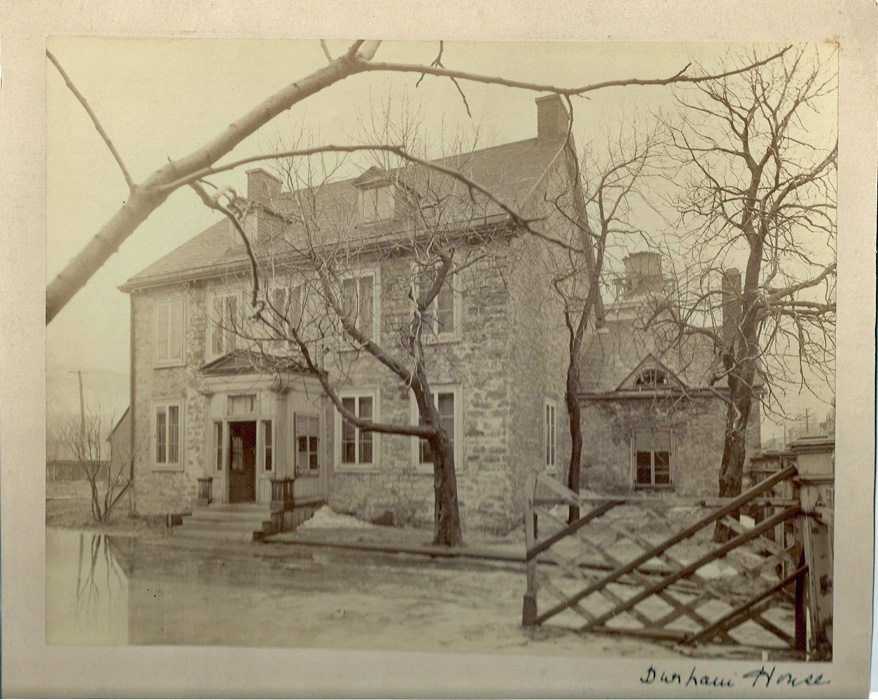
Durham House, home of Stanley Bagg and his wife, Mary Ann Clark, was on St. Lawrence Blvd, near present-day Prince Arthur Street. Photo courtesy Lucy Anglin Hunt.

Stanley and Mary Ann made an attractive couple. At 31, Stanley had broad shoulders, a straight nose and full lips, while Mary Ann, 24, was slim and dark-haired. As a wedding present, her father gave the couple a handsome two-storey stone house called Durham House, where their only child, Stanley Clark Bagg, was born a year later. The house was named after Durham County, England, where John Clark, a butcher by trade and an investor by aptitude, and his wife were born.

When Stanley and Mary Ann began their lives together in Montreal, the city was already 180 years old, but it was going through a period of rapid change. Stanley Bagg and John Clark took advantage of opportunities that came their way because of those changes, thus laying the foundations of the family’s future. 

Post updated with additional photo on May 7, 2015

Research remarks: Those of us who had ancestors in Quebec have a gold-mine of genealogical information at our finger-tips: notarial documents, housed at the Bibliothèque et Archives nationale du Québec (BANQ), the national library and archives of Quebec. Every time someone signed a lease, wrote a will, purchased a property or made a protest (usually because money was owed), a notary prepared the document.

Although these documents can be difficult to find (you have to know the name of the notary before you can even start searching the indexes), the results are often worth the trouble. For example, the Mile End Tavern lease, act # 2874 in the records of notary J.A. Gray, suggests that John Clark was a knowledgeable farmer who cared for the land and valued his relationship with the nuns next door.

Stanley Bagg’s military contracts, the agreement he signed with his business partners to build the Lachine Canal and his marriage contract were also notarial documents that reveal a great deal about his business activities and private life.

The BANQ website (www.banq.qc.ca) is not easy to use, even if you click on the English version. But if you know the name of a notary your ancestor used in the 19th century, try browsing the indexes at http://bibnum2.banq.qc.ca/bna/notaires/index.html. Not all notaries’ indexes have been digitized.