
Category: Bagg

Stanley Bagg and the Montreal West By-Election of 1832

Stanley Bagg (1788-1853) was a successful Montreal merchant, but he is best remembered for his brief foray into politics. Unfortunately, he probably would have preferred that this chapter of his life be forgotten. 

In 1832, a by-election was held to fill a vacancy in the Legislative Assembly of Lower Canada seat for Montreal West, an area that included today’s downtown, from the St. Lawrence River to Mount Royal. Bagg, my three-times great-grandfather, was the candidate of the English party. His opponent was Daniel Tracey (1794-1832), an Irish-born doctor and journalist whose supporters included reform-minded members of the Patriote party.
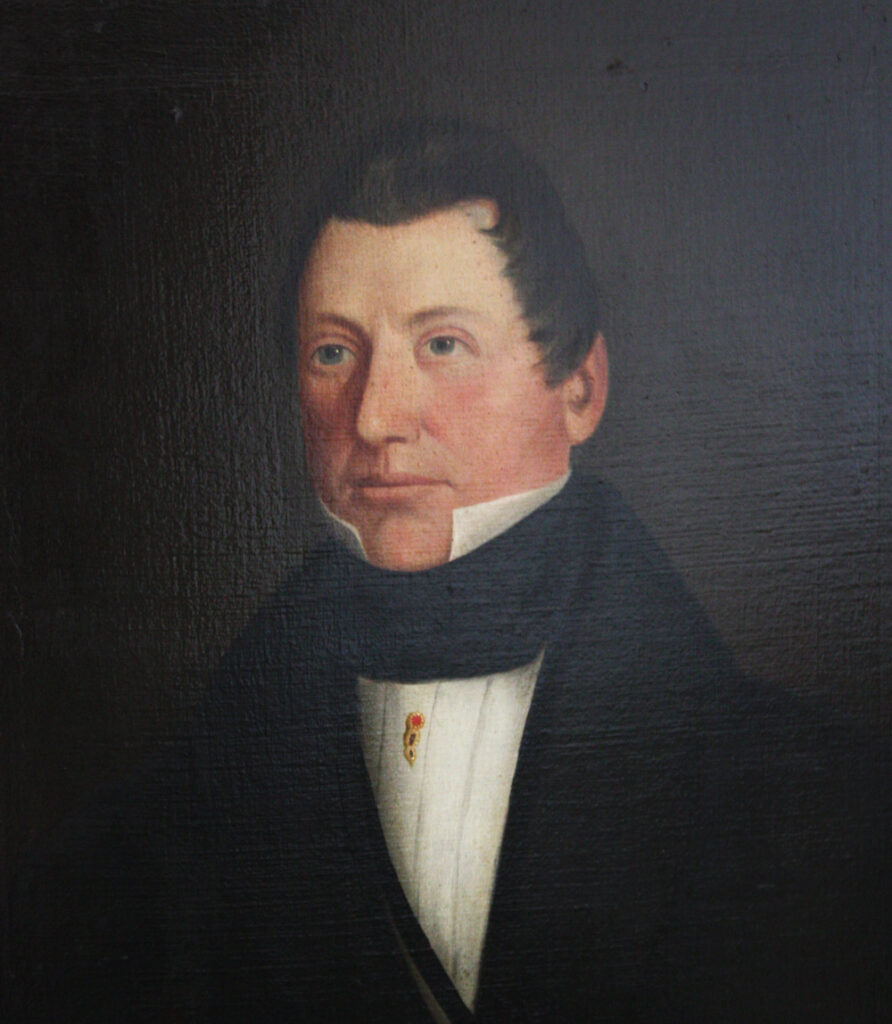
Stanley Bagg; artist unknown

This was a period of increasing French Canadian nationalism and growing calls for responsible government. Although the elected Legislative Assembly debated and passed bills, the appointed Legislative Council had to approve them. That meant all decisions were effectively controlled by the colony’s British administrators. 

It was also a time when elections were rough affairs. There was no such thing as a secret ballot: voters announced their choices to the returning officer, who wrote them down. Each candidate could challenge would-be voters to ensure they met the legal qualifications to vote, and candidates routinely hired “bullies” to try to prevent their opponents’ supporters from reaching the polling station. Furthermore, an election could continue for days, as long as at least one vote was cast each hour until the daily closing time. 

Bagg probably did not expect a difficult race. Although he was born in the United States, he grew up in Montreal and knew the community well. He had the support of most of the city’s leading merchants. His platform included promises to promote the city’s prosperity and the cause of education, to improve communications, and to protect religion and the liberty of conscience. And although he was the establishment candidate, he spoke publicly in favour of political reform on at least one occasion.

As it turned out, neither candidate established a clear lead, and the voting process, which began on April 25, lasted for almost a month. Bagg’s supporters included American, English and Scottish merchants and some moderate French Canadians. Most of the city’s Irish residents voted for Tracey, as did both working class and well-educated French Canadians.  

The candidates’ bullies made trouble from day one. Magistrates and special constables were hired to maintain order, but as time passed, nerves frayed. In mid-May, several of the magistrates requested the assistance of the British army in case a riot broke out. The next day, May 21, there was a scuffle on the street near the polling station. Although calm was restored, one of the magistrates was concerned that Tracey’s supporters were planning violence, so he summoned the troops. Another of the magistrates read the Riot Act, meaning that the crowd in the nearby square had to disperse within an hour. Nevertheless, orderly voting continued. When the polling station closed at the usual 5 o’clock, Tracey had a three-vote lead. 

After the candidates started heading home, some of Tracey’s supporters began to throw stones. So did some of the constables and the Bagg supporters. The officer in charge of the troops ordered his men to open fire on the crowd. They fired one round and killed three people, all of them innocent bystanders.  

The following day, Bagg released a statement in which he announced his withdrawal from the election, and Tracey was pronounced the winner. Tracey died several weeks later, a victim of the cholera epidemic that swept through the city. 

Neither a coroner’s inquest, nor a grand jury investigation, nor a special inquiry by the Legislative Assembly found fault with conduct of the army or civil authorities on May 21. Meanwhile, the English party and the Patriote party continued to blame each other. Most history books repeat the conclusions of the inquiries: the three unfortunate deaths occurred when the army restored order. But there are questions as to whether there actually was a riot. From a 21stcentury perspective, it appears that several people made serious errors that day.

In 1837, a variety of factors, including the need for political reforms in Lower Canada, led the Patriotes to launch a full-scale rebellion. The violence that occurred in 1832 no doubt contributed to the buildup of tensions in the colony. Bagg served as a major in the 1stBatallion Loyal Montreal Volunteers during that rebellion. 

According to a family story, Bagg felt terrible about the deaths of those innocent people, and he never ran for political office again. My ancestor was not personally responsible for the deaths of the three bystanders, nor was he responsible for exonerating those who were at fault, but Bagg’s use of bullies to try to win the election did not make him look good.

Notes

My main source for this article is The Riot That Never Was: the military shooting of three Montrealers in 1832 and the official cover-up, by James Jackson (Montreal: Baraka Books, 2009).

Jackson researched newspapers, documents and the testimony recorded in the inquiries that took place and he concluded that the riot never happened. Jackson did not, however, have much information about Stanley Bagg himself, and some of the details he gave about him were incorrect. In my next post, I will write an overview of Stanley Bagg’s life.
William S. Bush, Baptist Preacher

When William S. Bush (c. 1816-1892) decided to become a Baptist clergyman, he did not choose an easy life for himself and his family. He preached in several small towns in a rural, mountainous region of northern New York State, and although the Baptist religion was very popular in America at the time, each congregation was independent, and doctrinal differences could create frictions.

William was born in West Haven, Vermont, the son of farmer William Bush and Polly Bagg Bush (1785-1856). William’s middle initial stood for Stanley, a name that appears frequently in the Bagg family as a nod to Polly’s mother, Pamela Stanley.  

I do not know what influenced him to become a Baptist. Polly’s family worshipped in the Congregational church in Massachusetts, but I doubt the Baggs were very religious. After Polly’s family moved to Canada in the late 1790s, her father and brothers became Anglican and her sister married a Catholic. I know nothing about William’s father.

The Baptists were active in spreading the gospel in Vermont. There were numerous churches in the state, they were well organized and they promoted education. It is quite likely that William studied at the Baptist-run Hamilton Literary and Theological Institution in Hamilton, New York.

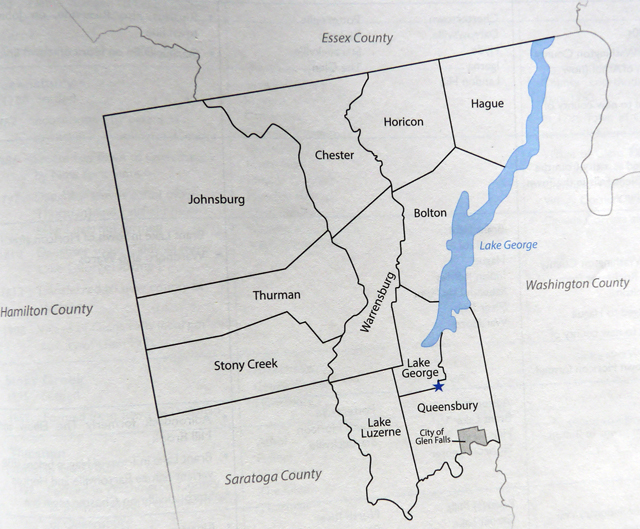
Warren County, New York

There were two main branches of Baptists in mid-century New York: Old School Baptists who did not adopt any modern practices that were not found in the Bible, such as such as missions and Sunday schools; and Missionary, or New School Baptists, who did embrace such innovations. In addition, there were numerous independent Baptist churches. I do not know which beliefs William subscribed to.  

In 1844, he was pastor of Johnsburg Baptist Church, Warren County, New York, and in the following years, he moved many times in that region. This kind of turnover appears to have been normal for the area’s Baptist clergymen. The 1850 census found him in Minerva, Essex County, New York. In 1860 he was back in Johnsburg. When the 1865 state census and the 1870 federal census were taken, the family was in Chester, Warren County, and in 1880, William was living in Horicon, Warren County.  

In the 19th century, Johnsburg was a thriving town, and the construction of the railroad beside the nearby Hudson River in 1871 improved transportation. Logging was the most important local industry, especially in the winter. The logs were floated downstream on the Hudson, and local saw mills, driven by water power, kept employees busy. There were four local tanneries in the 1870s, with the tannery in North Creek turning out 30,000 hides a year. There was also some garnet mining in the area. 

Despite the relatively harsh climate, a lot of the land had been cleared. Farmers grew beans, corn, oats and squash, and some grew rye to supply a local distillery. Others supplemented their incomes by selling valuable potash they made from wood ashes.

Slavery was an issue that no doubt concerned William, both as a preacher and as an individual. In the 1840s, this issue caused a rift between Baptists in the northern parts of the United States and those in the south, who defended it. William must have felt strongly because he registered for the Union army in the U.S. Civil War Draft in 1863, though he probably did not serve.

In 1860, William’s Aunt Sophia Bagg, the widow of wealthy landowner Gabriel Roy, died, leaving him and his siblings generous bequests. He and his brother, Phineas Bagg Bush, travelled to Montreal in January 1861 to receive their inheritances. The 500 pounds Sophia left him must have gone a long way to supplement his preacher’s salary, while the trip to Montreal would have provided an opportunity to meet his many Canadian cousins. 

I have been unable to find a record of William’s marriage, so his wife’s maiden name remains a mystery. In census records, she appears as Sarah M. Bush, born in New York. The couple had at least five children, four of whom grew to adulthood.

Their oldest daughter, Sophia, (c 1843 – ) was born in Vermont. She last appeared living with her parents in the 1865 state census. Lydia, born around 1848, appeared in the 1850 census but must have died before 1860. Son George S. Bush (c 1846 – ) seems to have remained single all his life. Charles A. Bush (c 1858 – ) may have married and moved west, first to Arizona, then to Washington State, and Lora Bush (1860-1916) probably married Watson Huntley, remained in northern New York State and had several children.

William’s wife Sarah must have died before 1880 because in that year’s federal census, William, now aged 62, was married to his second wife, Diana, 59. A box in the census was ticked indicating that they had been married that year. Diana must have died soon after because William seems to have remarried again. Next to his grave in North River Cemetery, North River, New York, is the gravestone of his wife Mary A. Bush (1821-1889), who was born in England. William last appeared living in Johnsburg in the 1892 state census, age 75, occupation preacher. The census was carried out in February and William died that September.   

See also:

Janice Hamilton, “Polly Bagg Bush and Her Family,” Writing Up the Ancestors, April 28, 2016 https://www.writinguptheancestors.ca/2016/04/polly-bagg-bush-and-her-family-part-1.html

Janice Hamilton, “Polly Bagg Bush: A Surprise Sister,” Writing Up the Ancestors, May 23, 2014 https://www.writinguptheancestors.ca/2014/05/polly-bagg-bush-surprise-sister.html

Photo Credit:

New York Family History Research Guide and Gazetteer, p. 693

Notes and Sources

It has been difficult to find information on this family, partly because they lived in a rural area where there were few local newspapers and no such thing as a city directory. An obituary for Rev. William S. Bush was probably published somewhere. I have checked the digitized Warren County newspapers on the New York Genealogical and Biographical Society website, but have so far found no references to him.  

Baptists say that only people who are believers should be baptized, so they do not baptize babies and their baptismal records do not indicate of date of birth. That presents a problem in a state that did not keep vital records until the early 1900s. Nor do Baptists believe that marriage is a sacrament, so unless an individual minister kept his own records of the congregation’s activities, there are no church marriage registers. Finally, Baptist congregations are basically independent, so they do not store the records they do have in a centralized location. For this reason, I have relied on censuses to research William S. Bush’s family.   

I used www.ancestry.ca to find the U.S. federal and state census records for this family, and I came across several public member trees on Ancestry that mention his family. There is a photo of William’s grave on Find A Grave (www.findagrave.com/cgi-bin/fg.cgi?page=gr&GRid=112480768) and this is where I found his date of death.

The website www.reynoldstonnewyork.org features articles and photos about late 19th-century life in the Adirondack region of New York State, including logging, saw mills and potash making. My information about the history of Johnsburg comes from a history of the town,  www.johnsburgny.com/history.html.

William was mentioned as a pastor of Johnsburg Baptist Church in H.P. Smith, History of Warren County (www.rootsweb.ancestry.com/~nywarren/countyhistory/smith/xxxiii.htm).The sources I used for background on the Baptist Church include the New York Family History Research Guide and Gazetteer, New York: New York Genealogical and Biographical Society, 2014; Vermont Baptists, The Baptist Enclyclopedia, 1881 (http://baptisthistoryhomepage.com/Vermont.baptists.the.html); and American Baptists, A Brief History (www.abc-use.org/wp-content/uploads/2012/06/history.pdf).

This article was edited on June 12, 2016 to add historical background on Johnsburg.